Inside a Full-Service Demolition Company’s Day on Site
A Behind-the-Fence Look at Demolition Day
A full-service demolition company’s workday is not just a big cloud of dust and a building falling all at once. It is a planned, step-by-step process that protects people, nearby properties, and the environment while still moving fast enough to keep a project on schedule.
When you drive by a demo site in the Kansas City area, you might only see big machines and a fenced-off lot. Inside that fence, there is a whole team focused on safety checks, permit rules, utility issues, recycling goals, and site prep for whatever gets built next. In this post, we will walk through a typical spring workday on site and show how safety, efficiency, and environmental responsibility guide every move a full-service demolition company makes.
Sunrise Safety Briefing and Site Walk
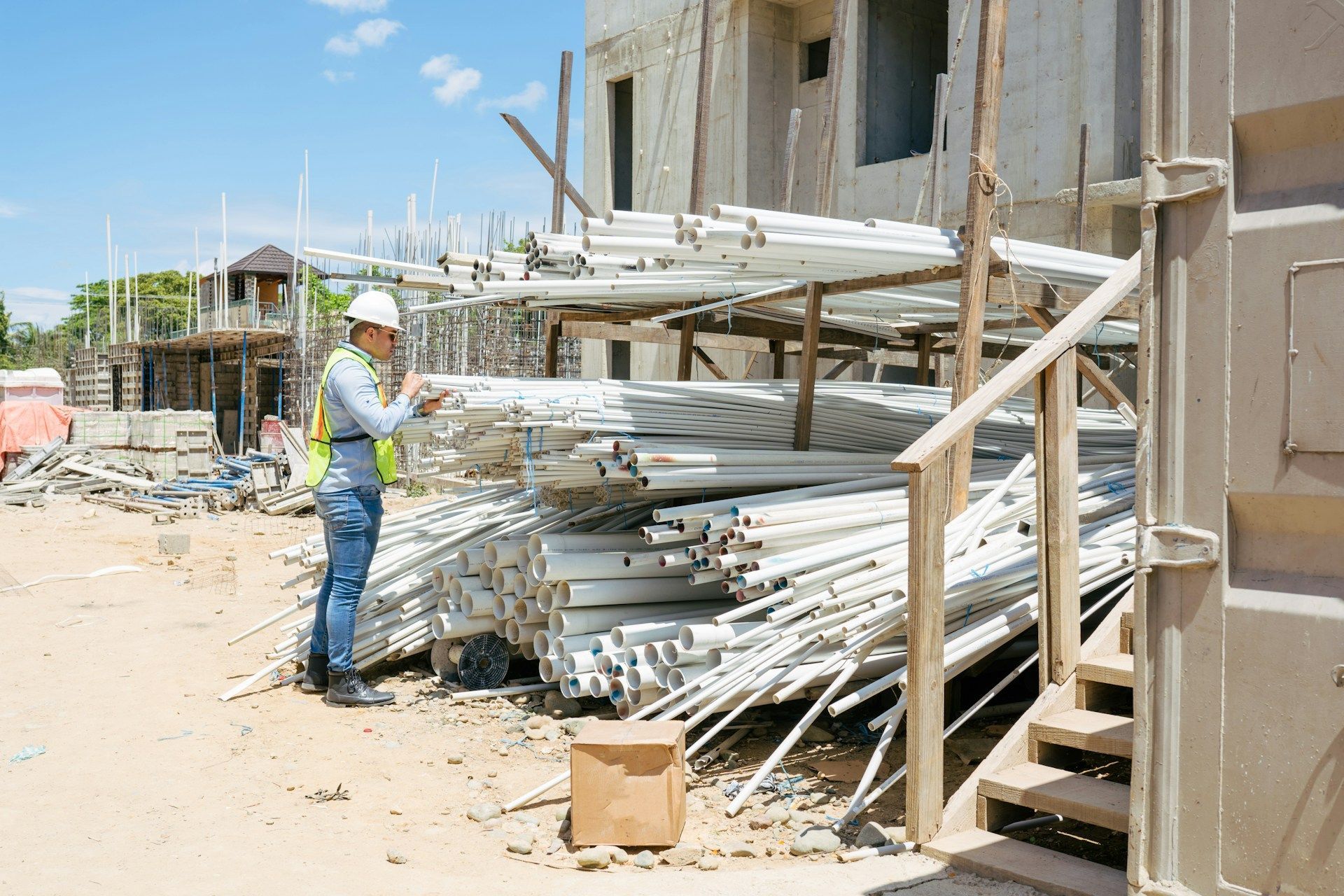
Most demolition days start before the sun is fully up. The crew arrives, grabs their gear, and checks in with the superintendent. Before any bucket hits a wall, the focus is on people and equipment.
Every morning usually includes:
- Personal protective equipment checks, like hard hats, safety glasses, gloves, and high-visibility vests
- Equipment walk-arounds, looking for leaks, loose tracks, worn hoses, and working lights and alarms
- Fuel and fluid checks so machines do not shut down in the middle of a critical task
After that, the whole crew gathers for a safety briefing. This is where the superintendent talks through what the day looks like, what areas are active, and what everyone needs to watch out for. Topics often include:
- Site-specific hazards, like weak floors, basements, or known structural issues
- Utility locations, even after disconnects, since old lines can surprise you
- Traffic patterns for haul trucks, skid steers, and on-foot workers
- Weather conditions, including the chance of spring storms, wind gusts, or heavy rain
Then comes the site walk. The superintendent and key crew members move through the active zone and confirm that:
- Barricades and warning signs are in place and easy to see
- Utility disconnects are complete, tagged, and documented
- Neighboring homes, businesses, sidewalks, and streets are protected with fencing or barriers
Only after these checks are done is the site cleared for work.
Precision Planning Before the First Wall Comes Down
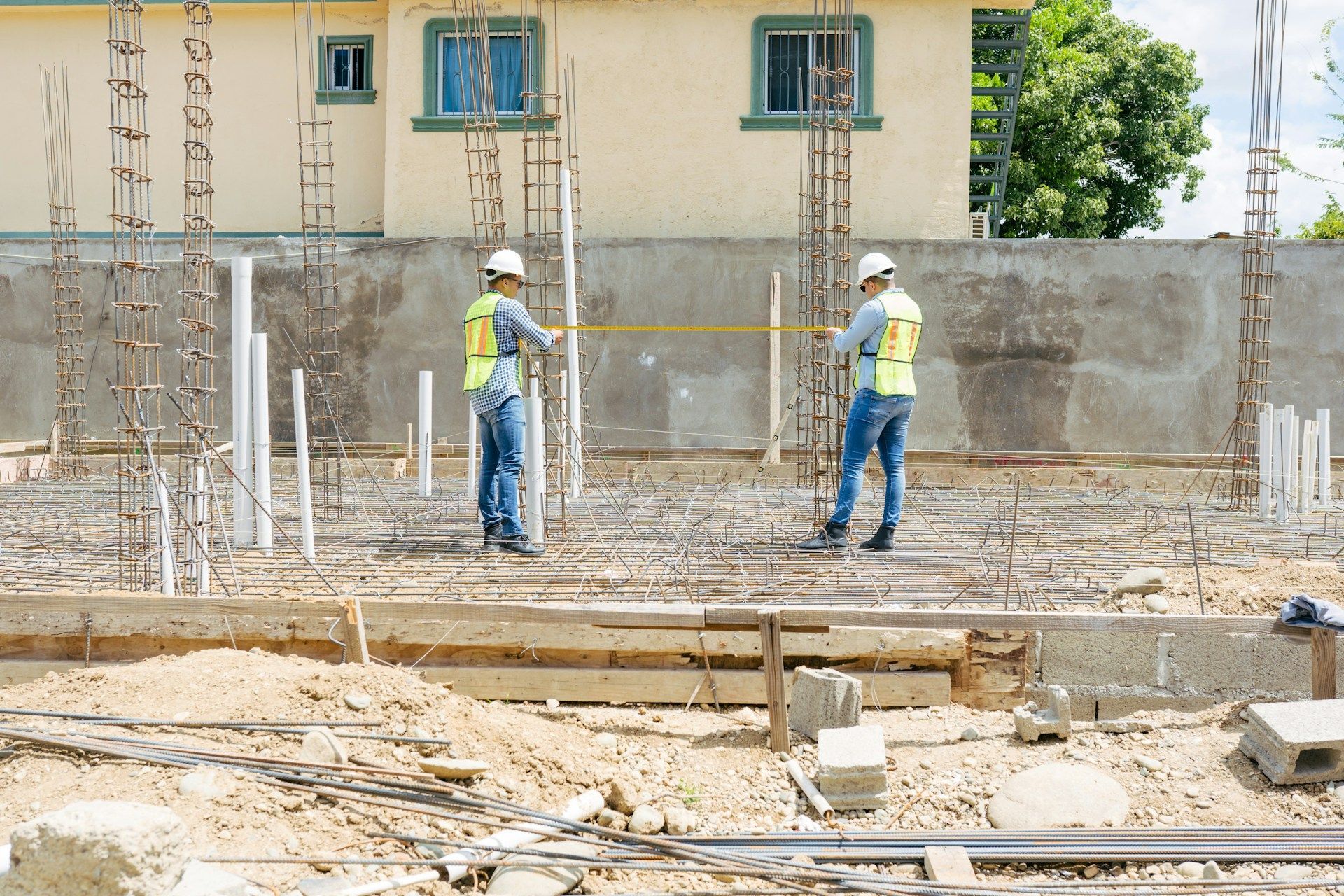
From the outside, demolition can look like pure muscle. On site, it feels a lot more like following a playbook. A full-service demolition company takes the engineered plans, permits, and owner expectations and turns them into a detailed plan for the day.
That plan covers things like:
- Which part of the structure comes down first
- Where machines will sit and how they will move
- How crews will safely enter and exit active areas
- Where debris will be staged for sorting and hauling
There is also a lot of communication before machines start running. The team stays in close contact with:
- Property owners or managers, to confirm access, timing, and special concerns
- Neighboring businesses or residents, so they know about noise, dust control, and traffic changes
- City inspectors, who may visit to confirm permit conditions and safety practices
- Utility providers, to be sure gas, power, and water are shut off or marked properly
Another big part of planning is material salvage and recycling. On many projects, interior items and certain building materials can be pulled out before heavy demolition starts. This might include:
- Metals, like steel beams and copper wiring
- Concrete and masonry that can be recycled for fill or base material
- Reusable fixtures or equipment the owner wants to keep
By thinking about salvage early, the team can sequence work so those materials are removed safely and cleanly before the main structure comes down.
Machines, Manpower, and Methodical Structure Removal
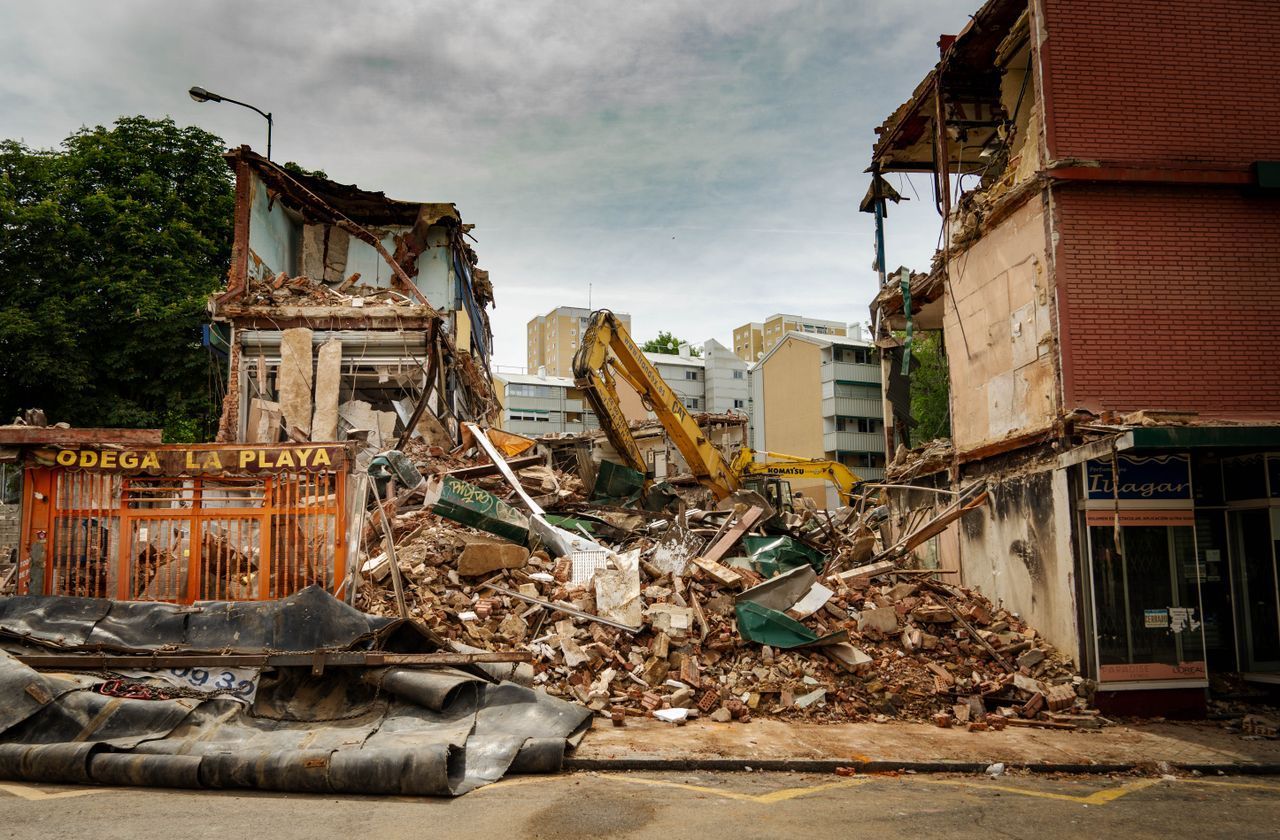
Once everything is planned and cleared, the visible demolition begins. This is where machines and people move together in a controlled pattern, instead of just knocking everything down at once.
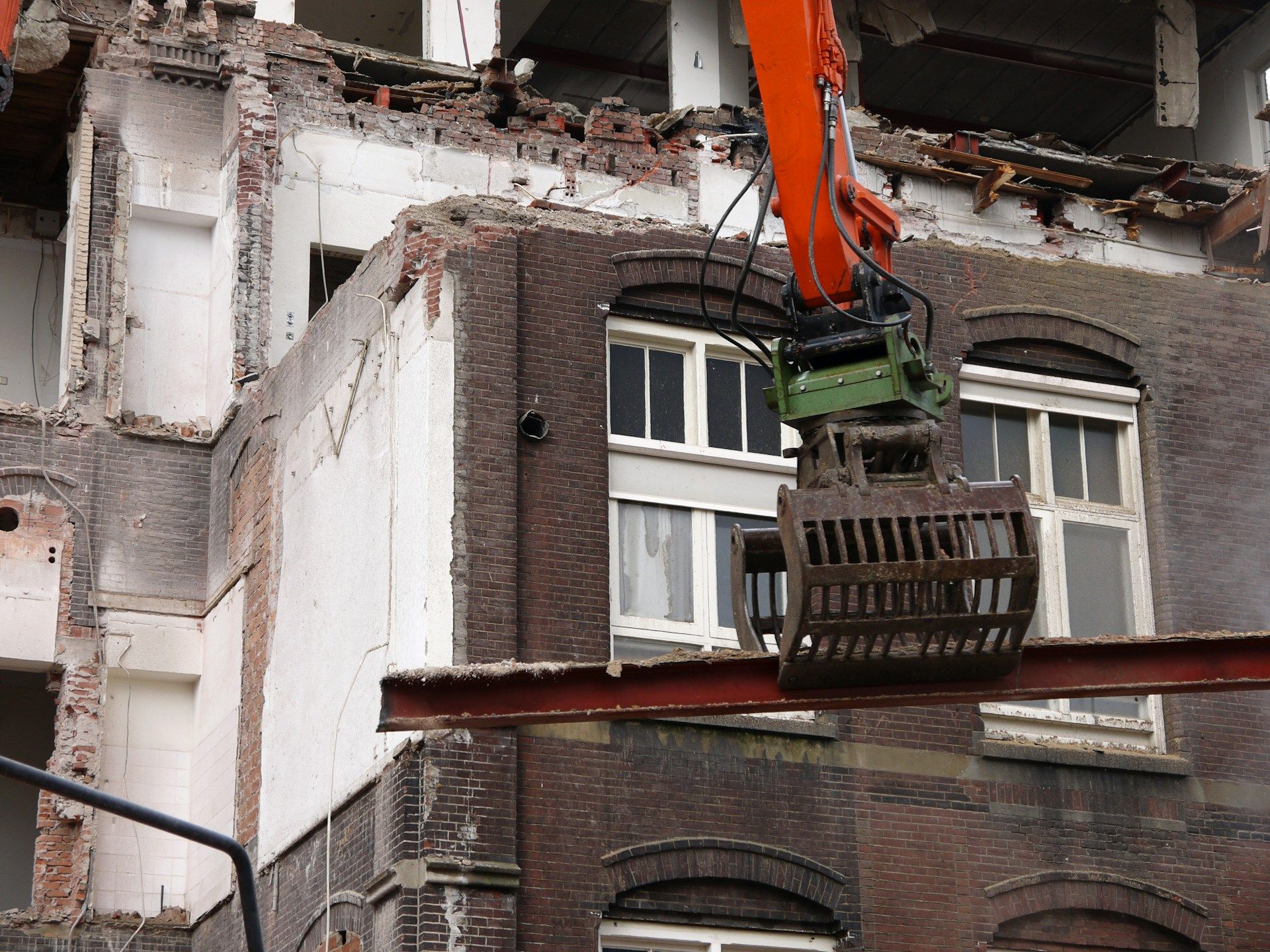
Operators and laborers work in sections. They take down parts of the structure in a set order that keeps the building stable until each section is safely on the ground. This helps prevent sudden collapses and protects anyone working nearby.
On a typical site, you might see:
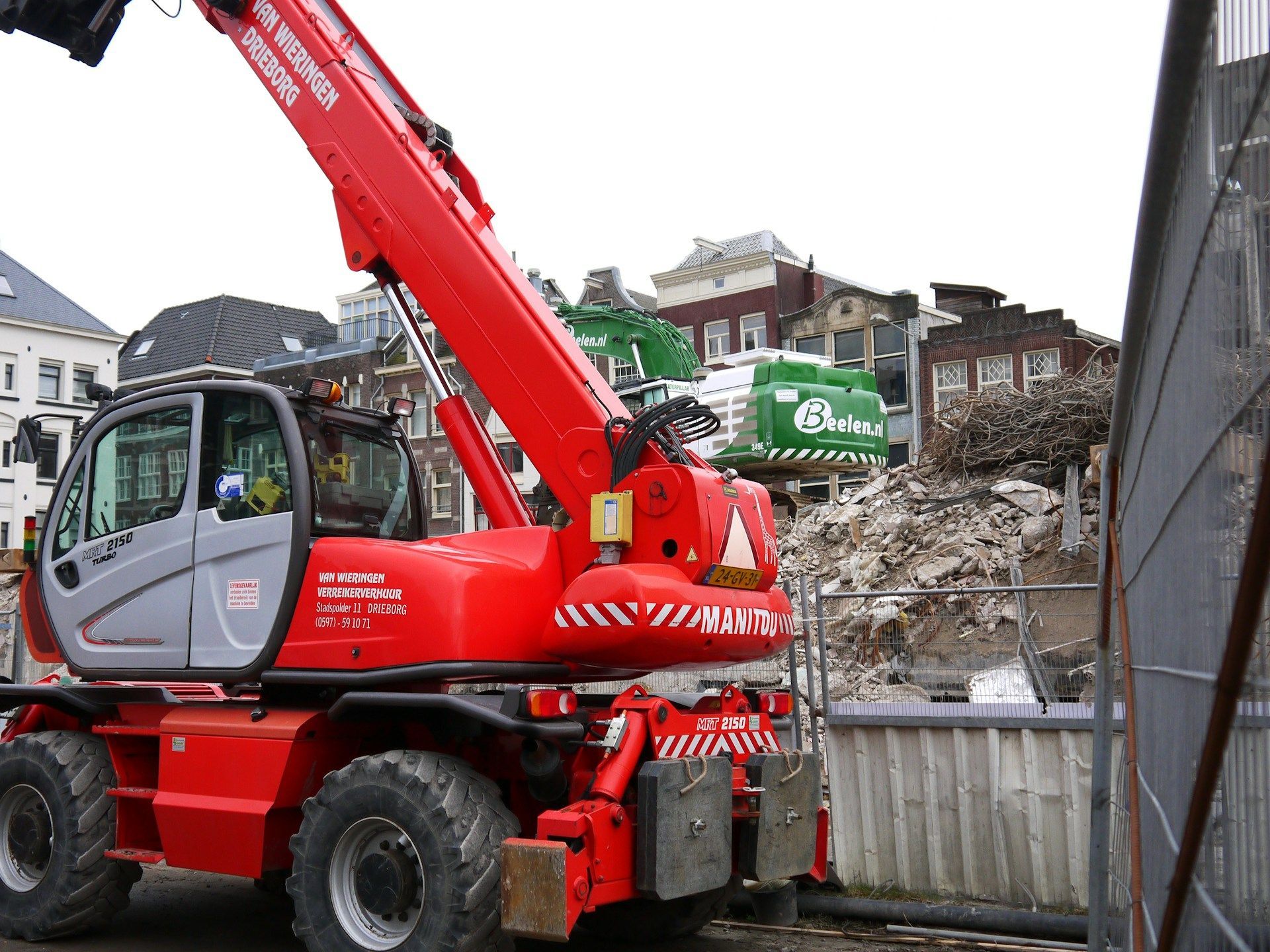
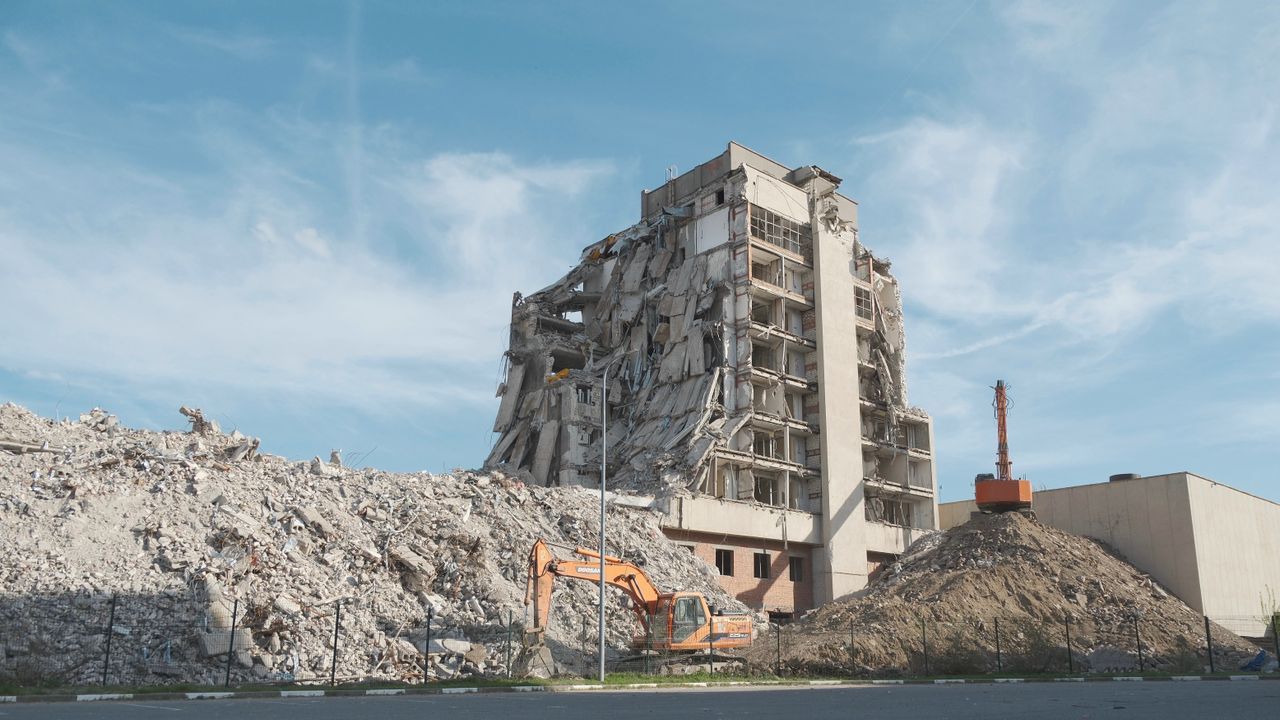
- Excavators with shears, grapples, or buckets cutting and pulling materials down
- Skid steers moving debris into piles or loading it into containers
- Water trucks or hoses spraying down dust at the point of impact
Dust control is a big piece of the job, especially in busy Kansas City neighborhoods. Crews adjust water flow throughout the day to keep the air clearer without making the site muddy and unsafe. Noise is also managed as much as possible, which may mean certain loud tasks are grouped together or limited to set hours.
Spring weather adds another layer. If strong wind, heavy rain, or lightning moves into the area, the superintendent may pause or slow some activities. Working safely around weather can sometimes matter more than staying on a perfect schedule.
Debris Sorting, Hauling, and Environmental Stewardship
As parts of the structure come down, the next job is to keep the site from turning into a mess. Debris is not just scooped up and thrown away. It is sorted, staged, and moved in a planned way.
On site, crews often separate:
- Concrete and brick for crushing and reuse
- Steel and other metals for recycling
- Clean wood that may be reused or recycled
- Mixed or contaminated debris that must go to a landfill
Roll-off containers are placed where machines can load them quickly without blocking traffic paths. Haul trucks are scheduled throughout the day so full containers do not sit in the way and empty ones are always ready. This keeps the site cleaner, safer, and easier to work.
A full-service demolition company also pays attention to where materials go after they leave the fence. That can include:
- Working with local recycling facilities for concrete and metals
- Using permitted landfills for non-recyclable debris
- Keeping records of what was recycled and where it went, which can help owners with sustainability goals or future reporting
This focus on sorting and responsible disposal lowers the amount sent to landfills and supports a more environmentally responsible project.
Final Site Prep and Readiness for What Comes Next
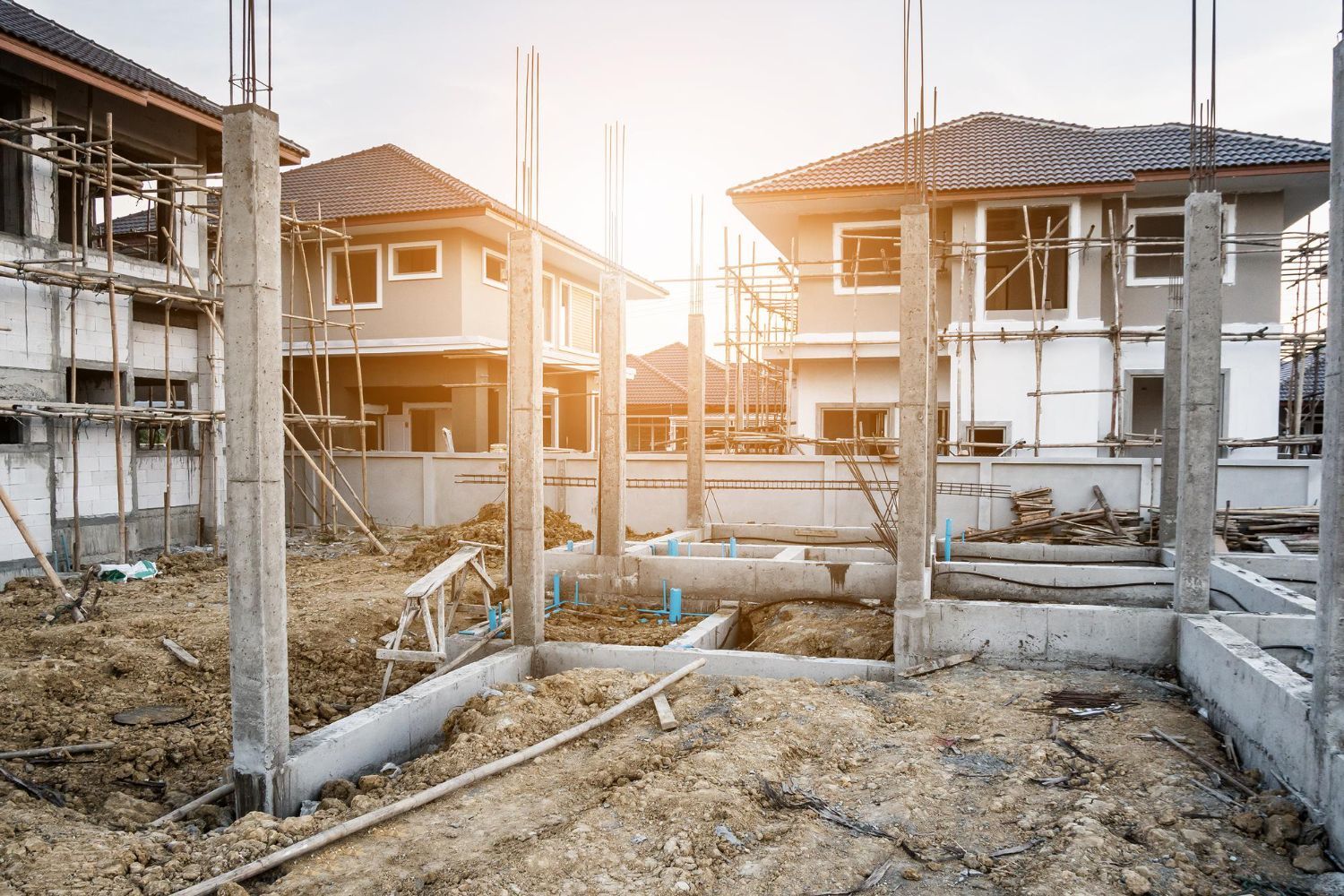
By the end of demolition, the structure is gone, but the work is not done yet. A cleared lot still needs to be shaped, stabilized, and checked before anyone can build or use it.
Final site prep usually includes:
- Removing remaining debris and small hazards
- Rough grading the ground so water flows away from buildings and does not pool
- Backfilling basements or voids and compacting the soil
- Adding temporary stabilization, like rock or seeding, to help control erosion
As the workday winds down, the superintendent walks the site again. They check that utilities are still safe, erosion controls are in place, and any open hazards are blocked or covered. Fencing and gates are secured so no one can wander onto the site after hours.
Because a full-service demolition company manages everything from the first permit to the final grading, they can hand the property off in a clean, build-ready state. Builders, developers, or property managers get a clear, documented starting point for whatever comes next.
Get Started With Your Project Today
If you are ready to move forward safely and on schedule, T-Mac Environmental is here to help. As a full-service demolition company, we handle every phase of your project with careful planning, compliant practices, and efficient execution. Tell us about your goals, timeline, and site conditions, and we will provide a clear, tailored plan. Have questions or need a quote right away? Just contact us and we will respond promptly.